 Cool Brabus Smart In Orange Color
 Luxury Brabus Smart
 Inside Of Brabus Smart
 Red Brabus Smart
 Brabus Smart Unique Design
 Brabus Smart Hatchback
 Exotic and Sporty Brabus SmartCool Brabus Smart In Orange ColorLuxury Brabus SmartInside Of Brabus SmartRed Brabus SmartBrabus Smart Unique DesignBrabus Smart HatchbackExotic and Sporty Brabus Smart
 The Daewoo Lanos was a subcompact car manufactured by the Korean automaker Daewoo Motor from 1997 to 2002, and from 1997 to 2008 made under a license agreement by the Fabryka Samochodów Osobowych (FSO) in Poland, marketed as FSO Lanos, and assembled in Ukraine in modified versions known as Daewoo Sens and Chevrolet Lanos. The Chevrolet Lanos is also manufactured and sold in Egypt, from November 2008 to present (2011). For a brief period, it was also assembled by TagAZ in Russia, marketed as Doninvest Assol. The Lanos was designed by Giorgetto Giugiaro and featured three body styles - 3-door and 5-door hatchbacks and a 4-door sedan. Lanos was designed to replace Daewoo Nexia in the Daewoo lineup and was itself replaced by Daewoo Kalos. In 1992, Daewoo dissolved its joint-venture with General Motors, and simultaneously a decision was made to independently develop replacements for the contemporary Daewoo Motors products, based on older General Motors models. The Lanos development programme was formally started in autumn 1993, with the goal to create a car to replace Daewoo Nexia as Daewoo's small family car. The project began with a comparative study of competing models from 20 different manufacturers, with Toyota Tercel, Opel Astra and Volkswagen Golf identified as most competitive.
 Four design studios were commissioned to deliver clay models preseting their ideas for the new model's styling. Giorgetto Giugiaro's design was chosen, and Italdesign was commissioned to develop the car's final outside and interior styling. The technical side of the project was conducted simultaneously by Daewoo's development centre Korea as well as suppliers and contractors, who were involved in developing particular components. This included AC Rochester (engine componentry), Delco Chassis Division (brakes, including ABS), GM Powertrain (automatic transmission), Italdesign (body, structural analysis, electrics, prototype construction), PARS Passive Rückhaltesysteme GmbH (airbags) and Porsche (vehicle concept — research, structural analysis, suspension and brake components, and experimental production supervision). By the end of 1995, 150 prototypes were built (providing for three body styles). The development programme involved extensive testing in a multitude of locations. Safety test included high-speed stability and durability testing in England and brake testing on the Großglockner in Austria. Low-temperature testing was conducted in Canada, Sweden (Arjeplog) and Russia (Moscow, Khabarovsk), while high-temperature tests took place in the USA (Death Valley), Oman (Nizwa), Australia (Alice Springs), Spain (Barcelona) and Italy (Nardò). The programme was completed in a remarkable time of only 30 months from the approval to the commencement of large-scale production of the Lanos sedan for the Korean market. European-market production began in 1997.
 The cars were equipped with GM Family 1 D-TEC I4 engines ranging from 1.5 L (1549 cc) SOHC to 1.6 L (1598 cc) DOHC. In the UK and many countries of Europe (like Italy, France or Austria) there are also E-TEC models 1.4 (1349 cc) and 1.6 (1598 cc). The suspension is built upon that of a Daewoo Nexia, as used in Vauxhall/Opel Astra Mk2 GTE. The four models available were S, SE, SE Plus, SX, and later, the SPORT model. The S was the base model and did not include many standard features (like a CD player or power windows). The SE was just a small step up from the S base model. However, the SX model usually included a CD, radio, and cassette player along with power windows, a power side mirror, and fog lights. A few select SX models even came with a sun-roof though not many did. In the Lanos's later years, the SE and SX models were dropped and replaced with a new trim line called the SPORT (2001–2002). The SPORT included several features similar to the SX, but also included red/black leather seats, and a metallic silver dash trim. Also, the SPORT model had window controls located on the doors rather than the center console (like in the previous trim lines). From 2002, ZAZ equipped some of the kits with a domestic MeMZ-307 engine and sold this version under the Daewoo Sens name; this practice continues with the start of full-scale production of model T150.
 In 2004, ZAZ adopted the Lanos chassis for full-scale production and installed new welding and painting lines. The updated version is called the ZAZ Lanos (internal model T150). The engines are still supplied by GM Daewoo, although ZAZ is currently seeking a way to acquire modern engine technology. ZAZ is selling the Lanos as ZAZ Sens. The "Sens" name is used on the pre-facelift models. Since January 2005, the Lanos produced in Poland started to be sold under the brand name of FSO. In 2005, General Motors contracted with ZAZ to provide Ukrainian-assembled Lanos models for the Ukrainian and Russian markets, to be imported duty-free, thanks to an international agreement, and sold through the GM dealer network. Sales of the Chevrolet Lanos sedan commenced in Russia in November 2005. The Chevrolet brand was utilized to compete effectively with the Renault Logan. In 2006, a panel van variant of the ZAZ Lanos was introduced. The 5-door hatchback version was available with all the options and manual transmission; it was also called Daewoo "Juliet" in Egypt. Near the end of year 2000 the Lanos was introduced with a different rear end design and a face lifted front. It was called "Lanos II" in this particular market. A SE version came with all the options plus the manual transmission. The automatic transmission version was stopped shortly after the introduction of the "Lanos II". In November 2008, GM Egypt started selling Chevrolet Lanos. The car is built in the company's factory in 6 October district and it is basically a Daewoo Lanos with a Chevrolet emblem.
 Elegant Daewoo Lanos with red color
 Luxury white of Daewoo Lanos
 Cool Daewoo Lanos with blue color
 Daewoo Lanos interior view
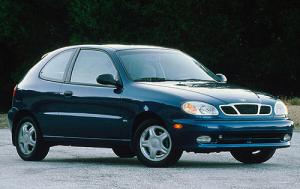 Cool and sporty Daewoo Lanos with blue color
 The Renault Altica is a concept car made by Renault and was debuted at the 2006 Geneva Motor Show. The unusual design is an attempt to fuse the bodies of a station wagon and a coupe, with a luggage capacity of 1,300 litres and four seats. Another notable feature of the car is that it features butterfly doors. Although the car emits a low 140kg/km CO2 emissions for its class (also due to its aerodynamics and a rear feature called "Synthetic Jet"), the Renault Altica is able to reach 60mph in 7.5 seconds[3] and its 2.0 litre diesel produces 177 bhp (132 kW; 179 PS) and 380 N·m (280 lb·ft) of torque. The Synthetic Jet is a patented aerodynamic device that consists of a 2mm wide slot located at the extreme rear of the roof. Through this slot air is alternately sucked and blown to control the separation of air depending on the Alitca's speed. At 80 mph (128.7 km/h) it is claimed that the Synthetic Jet reduces the Altica's Cd by 15% resulting in improved fuel economy.
 Renault Altica amazing design
 Renault Altica amazing pose with sporty design
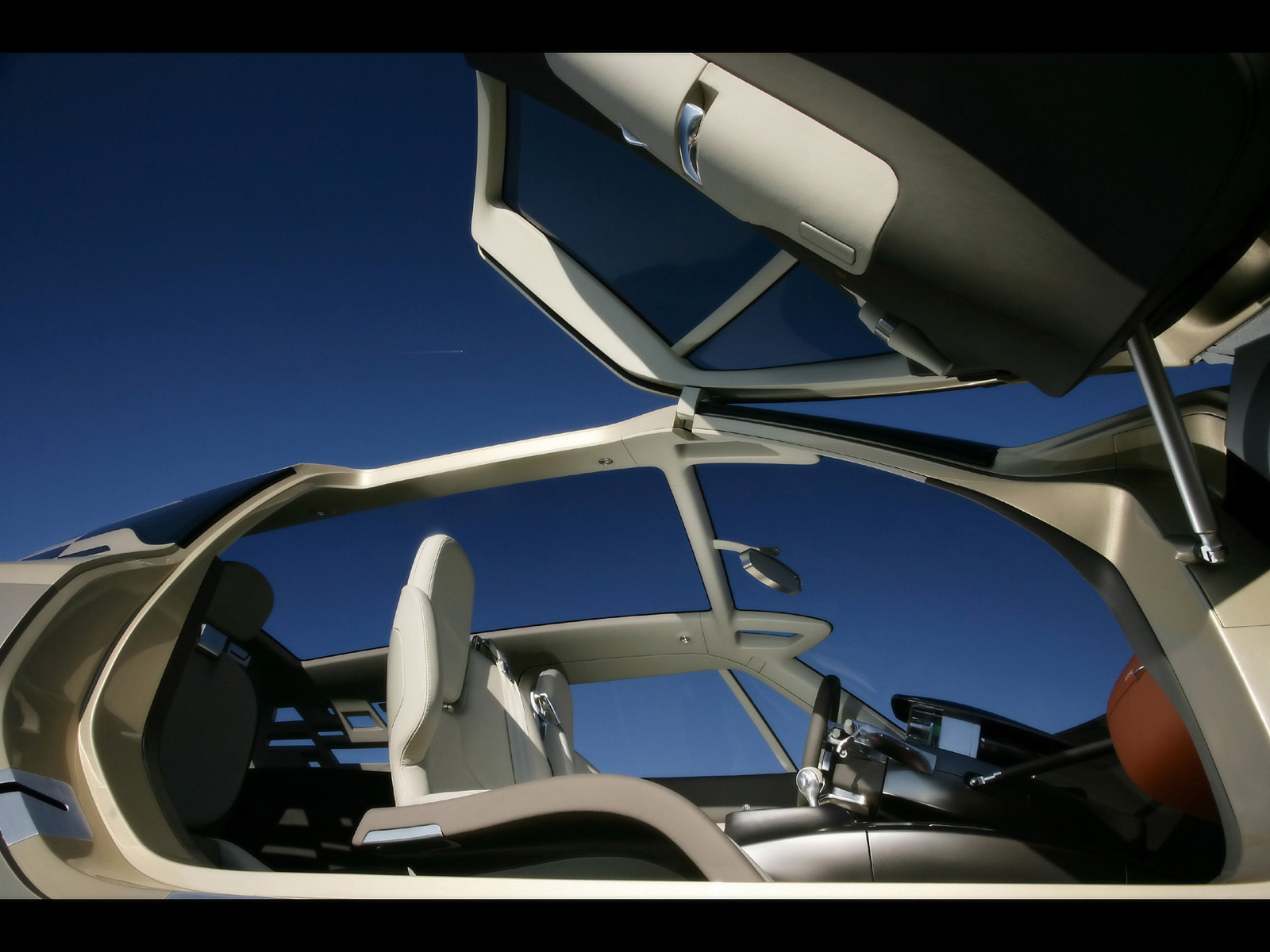 Renault Altica unique door design
 Luxury Renault Altica with white interior performance
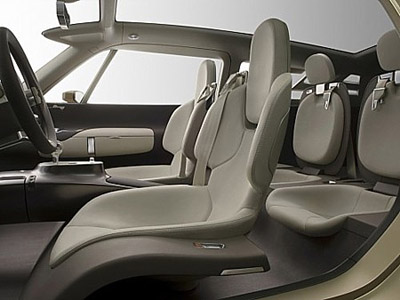 Luxury Renault Altica seat view
 Elegant Renault Altica design
 Elegant and cool Renault Altica interior design
 The Fiat Sedici is a mini sport utility vehicle co-developed by Fiat and Suzuki mainly for the European market. It was introduced at the 2006 Geneva Motor Show, and is built at the Magyar Suzuki plant in Hungary. The expected production volume is 60,000 units per year, 1/3 of these to be sold by Fiat and 2/3 of these to be sold by Suzuki, where it is badged as the SX4. The design was created by Giorgetto Giugiaro's Italdesign Giugiaro studio, and it is an alternative to mini multi-purpose vehicles (MPV), which have a more "boxy" appearance. Introduced by Fiat in December 2005, it was the official car of the 2006 Winter Olympics. As the car is four wheel drive, it is considered a 4x4. As 4x4 is 16, the car is named Sedici, which means "sixteen" in Italian. By pressing a button the driver can change between 4x2 and 4x4 transmission modes. The car also has electronic stability control (ESC) on the options list and a diesel particulate filter (DPF) is a standard feature. In November 2006 it was the second best selling SUV in the Italian market, and by June 2007 it was the best selling vehicle. The front wheel drive version of the Sedici was unveiled in spring 2008. It was available with the same engine choices as the 4X4 version and was available in two trim levels: Dynamic and Emotion. The price, in Italy, was around 2000€ cheaper than the 4x4 version.
 Elegant Fiat Sedici with sporty white color
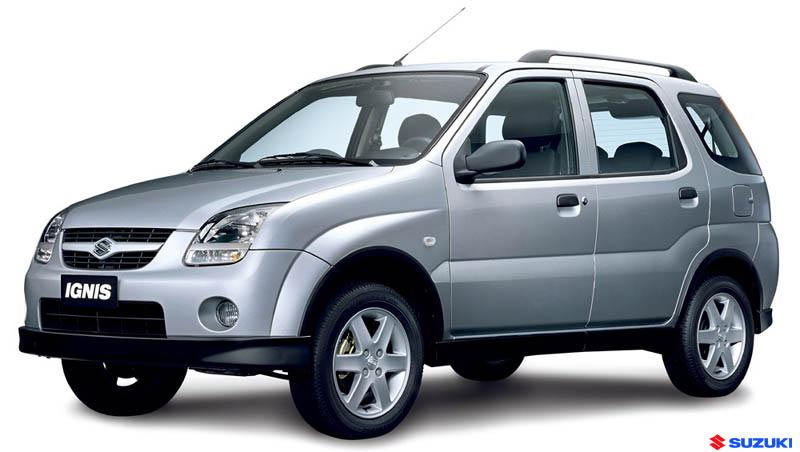 Luxury Fiat Sedici with silver color
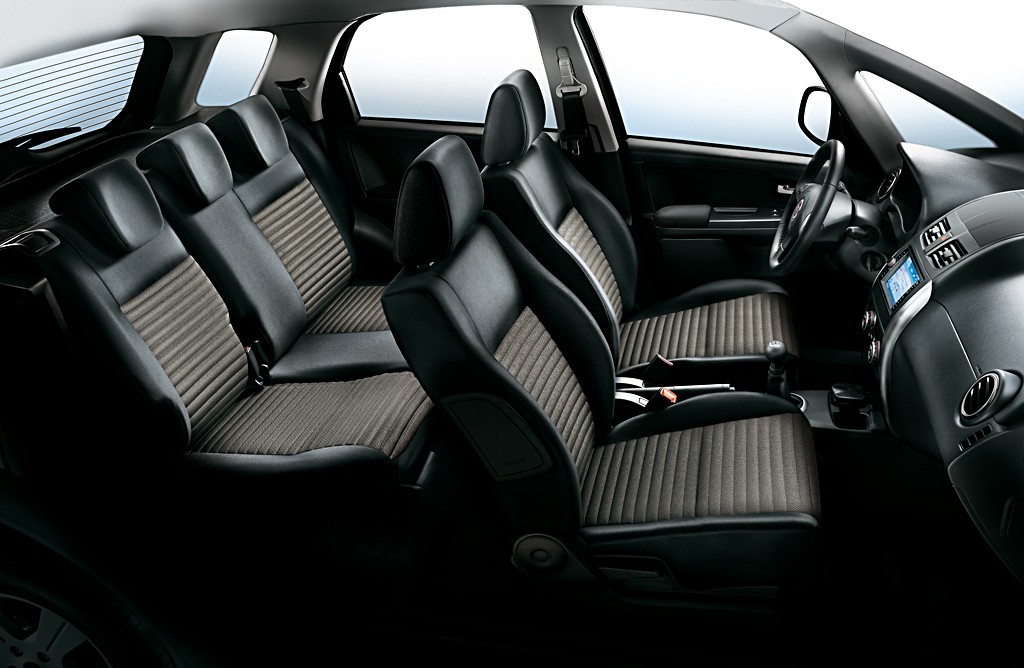 Luxury Fiat Sedici seat view
 Cool Fiat Sedici design with black color
 Elegant Fiat Sedici design
 Sporty Fiat Sedici with red color
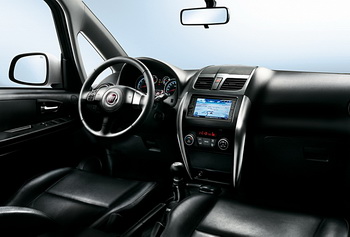 Luxury Fiat Sedici interior view
 Beautiful and cool Fiat Sedici with blue color
 The Renault Twingo is a city car built by French automaker Renault, first presented at the Paris Motor Show in September 1992 and sold in continental European markets beginning in 1993. The second generation Twingo was launched in Summer 2007. The "Twingo" name is a portmanteau derived from the words "Twist", "Swing" and "Tango". The Twingo was designed under Patrick le Quément, Renault's chief designer. Le Quément's belief was that it was a greater risk for Renault to take no risks at all, having seen its market share suffer from cars such as the Renault 9 and 11. The design of the Twingo resembles that of the 1982 Polish prototype Beskid, from which its monobox silhouette is claimed to be derived. The Twingo has been built since its launch in France in 1992 and in Colombia and Uruguay from 1995 to 2008, undergoing three intermediate restylings in 1998, 2000 and 2004 — solely as left-hand drive models in its first-generation and not sold in most RHD markets. Production of the first generation model ceased at the Flins factory in France on 28 June 2007. It is, however, still produced in Colombia by the Sofasa conglomerate. for the South American market. Total production up to 30 June 2007 was 2,478,648.
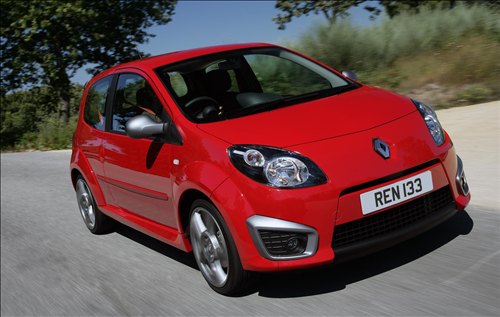 The Twingo featured revolutionary features (at the time of launch) of a centrally mounted instrument panel, consisting of a speedometer, fuel gauge and clock, with the odometer and trip recorder selected by pushing a button on the end of the steering column stalk. This left just a strip of warning lights in the area behind the steering wheel. It also had a sliding rear seat, which could be moved to either increase boot space or rear seat legroom. The boot parcel shelf was also unusual in that it was attached to the inside of the tailgate, and lifted up with the tailgate. It could also be clipped back against the rear window when not required. All the first-generation Twingos were equipped with straight-4 petrol engines. Initially available with an 8-valve 1.2-litre 55 hp (41 kW) engine, it was replaced with an 8-valve 1.15-litre 60 hp (45 kW) unit. A 16-valve 75 hp (56 kW) version was added in 2000. Many parts (e.g. the JB1 gearbox, brakes, engine, window switches and seats) are shared with other vehicles across the Renault range. Campus/Generation, Kenzo, Kiss Cool, InitialeA battery electric vehicle version was presented at the international Geneva Motor Show in 2006, that fits Zebra batteries.
 A concept was presented at the 2006 Mondial de l'Automobile. The production version was presented at the 2007 Geneva Motor Show after a last minute redesign was ordered. The model is based on the floorpan of the Renault Clio Mark II, with significantly improved strength and crash protection. Production was transferred from France to the Novo Mesto plant in Slovenia (Revoz). It went on sale in France, Italy and Slovenia on 15 June 2007, and in the rest of Europe, including the UK and Ireland, on September 4, 2007. The motoring press in the UK have criticised the new Twingo for being rather unadventurous in style and appearance compared to the original. The petrol engine is a 1.2-litre unit in three versions, an 8-valve 60 hp (45 kW) naturally aspirated, a 16-valve 75 hp (56 kW) naturally aspirated and a 16-valve 100 hp (70 kW) turbocharged version. The diesel engine is a 1.5-litre 65 hp (48 kW) dCi unit. Trim levels for the French market starts with the un-named base model followed by Authentique, Expression, Initiale, Dynamique and GT. On 31 January 2008 Renault announced the Twingo Renaultsport, with a new 133 hp (100 kW) 1,598 cc engine and Renaultsport styling. Its first public outing was at the 2008 Geneva Motor Show and the first cars were shipped in late 2008.
 The second generation Twingo is also available in right hand drive markets such as the United Kingdom and Japan. Engines available in the UK are the 75 hp (56 kW) in Dynamique trim level and 100 hp (70 kW) petrol units, in GT trim level. A 60 hp (45 kW) engine, in a cheaper Extreme trim level was released in January 2008, and the Renaultsport 133 hp (100 kW) went on sale in September 2008. In February 2009, a new model, called Freeway will be introduced, below the current Extreme model, but with the same 60 hp (45 kW) engine. In summer 2010, the Freeway and Extreme were renamed in the UK markets to the Expression and i-Music respectively; these were given new interiors and changes to some of the exterior, including new rear bumpers and wing mirrors. A convertible version, called Wind, was launched at the 2010 Geneva Motor Show. On 16 March 2011, the Renault Twingo won the "best city car award" in the Parkers' New Car Awards. On 28 July 2011, Renault announced a facelift to the current second generation Twingo which is to be unveiled at the Frankfurt Motor Show and is the first model in the Renault range to wear the new iconic design and branding that will eventually follow on to the entire range of Renault cars. The new Twingo sports new bumpers as well as a larger Renault badge and redesigned front and rear light clusters.
 Sporty Renault Twingo design with yellow color
 Renault Twingo interior view
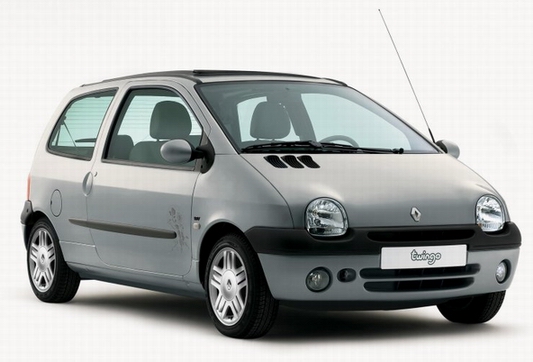 Luxury Renault Twingo with silver color
 Cool Renault Twingo with blue color, looks sporty
 Elegant Renault Twingo with cool blue color
 The Buick LeSabre is a full-size car made by the Buick division of General Motors from 1959-2005. For many years, the LeSabre was considered the entry level full-size Buick, carrying the lowest base price in the Buick lineup. Prior to 1959, that position had been held by the full-size Buick Special model; in 1959 the LeSabre replaced the Special, a nameplate that was reintroduced in 1961 for Buick's line of compact cars. The name originated with the 1951 Buick Le Sabre show car designed by Harley Earl. The LeSabre nameplate made its first appearance on the 1951 Le Sabre show car, which introduced the world to aircraft-inspired design elements such as the wrap-around windshield and tail fins. There is a V8 for the Buick LeSabre (5.00L) which originated in 1953. In 1959 LeSabre became the new moniker for what had previously been known as the Buick Special. The Buick LeSabre was offered in a full line of body styles except between 1965-1969 when its station wagon variant was dropped from Buick's full-size offerings. In 1977, the LeSabre was downsized along with other GM full-size models, and was available only in pillared coupe, sedan and wagon body styles.
 In addition to being Buick's entry level vehicle, the LeSabre was consistently Buick's best selling full-size car. Of the four nameplates introduced in 1959 (LeSabre, Invicta, Electra, Electra 225), the LeSabre nameplate lasted the longest. From 1959 to 1961, the LeSabre was powered by a 364 cubic-inch V8, which was smaller than the 401 cubic-inch V8 used in the more expensive Invicta and Electra models. The 364, which was previously used in all Buicks in 1957 and 1958, was rated at 250 horsepower (190 kW) in standard form with an "economy" 235 horsepower (175 kW) version offered as a "no cost" option in 1960-61 and an optional power-pack version with four-barrel carburetor and dual exhausts that was rated at 300 horsepower (220 kW). For 1962-63, the LeSabre came standard with a two-barrel carbureted version of the 401 V8 rated at 280 horsepower (210 kW), or a no-cost "economy" low-compression version rated at 260 horsepower (190 kW). Starting in 1964, all LeSabre models except the Estate Wagon shared their drivetrains with the mid size Buick models by switching to those models' smaller-displacement V8s at least as standard equipment for the next few years with cubic-inch displacements of 300 (1964–65), 340 (1966–67) and 350 (1968–76). A large-displacement would not reappear in a LeSabre until 1970 when a 455 cubic-inch V8 was introduced as an option and was offered through 1976. Beginning with the downsized 1977 models and continuing through three subsequent generations of front-drive LeSabres introduced in 1986, 1992 and 2000, Buick's 3.8-liter (231 cubic-inch)V6 would become the standard engine for most LeSabre models and V8 engines were dropped (except in station wagons) after the last of the rear-drive LeSabre sedans and coupes came off the line in 1985.
 For most years from 1959 to 1971, a three-speed manual transmission was standard equipment on all LeSabres but rarely ordered. Far more popular was the Turbine Drive automatic transmission (previously known as Dynaflow) along with power steering and power brakes. For 1961 and 1962, the automatic transmission was standard on the LeSabre and all other full-sized Buicks but in 1963 was moved back to the option list on LeSabres. For 1964, the Dynaflow-based Turbine Drive was replaced by two new automatic transmissions, the two-speed Super Turbine 300 and the three-speed Super Turbine 400. A four-speed manual transmission was offered as a LeSabre option from 1963 to 1965 but only a small number of cars were so equipped. Automatic transmissions would once again reappear as standard equipment on LeSabres in mid-1971 and continue in such form until the model line's demise after 2005. LeSabres were rear-drive six-passenger vehicles from 1959 to 1985 (station wagons through 1990) featuring separate body-on-frame construction along with a longitude-mounted front engine. The first downsized generation of LeSabres introduced in 1977 retained the rear-drive and body-on-frame construction, while the later-generation models introduced in 1986 switched to front-wheel-drive, unit-body construction and front transverse-mounted engine. Convertibles were offered each year through 1975 while two- and four-door hardtops were dropped after 1976 and only pillared body styles were offered from 1977 to 2005. Station wagons were offered through 1964 and then dropped for several years until being reintroduced in 1970 and continued until 1990 after which year they were moved to the revived Roadmaster series.
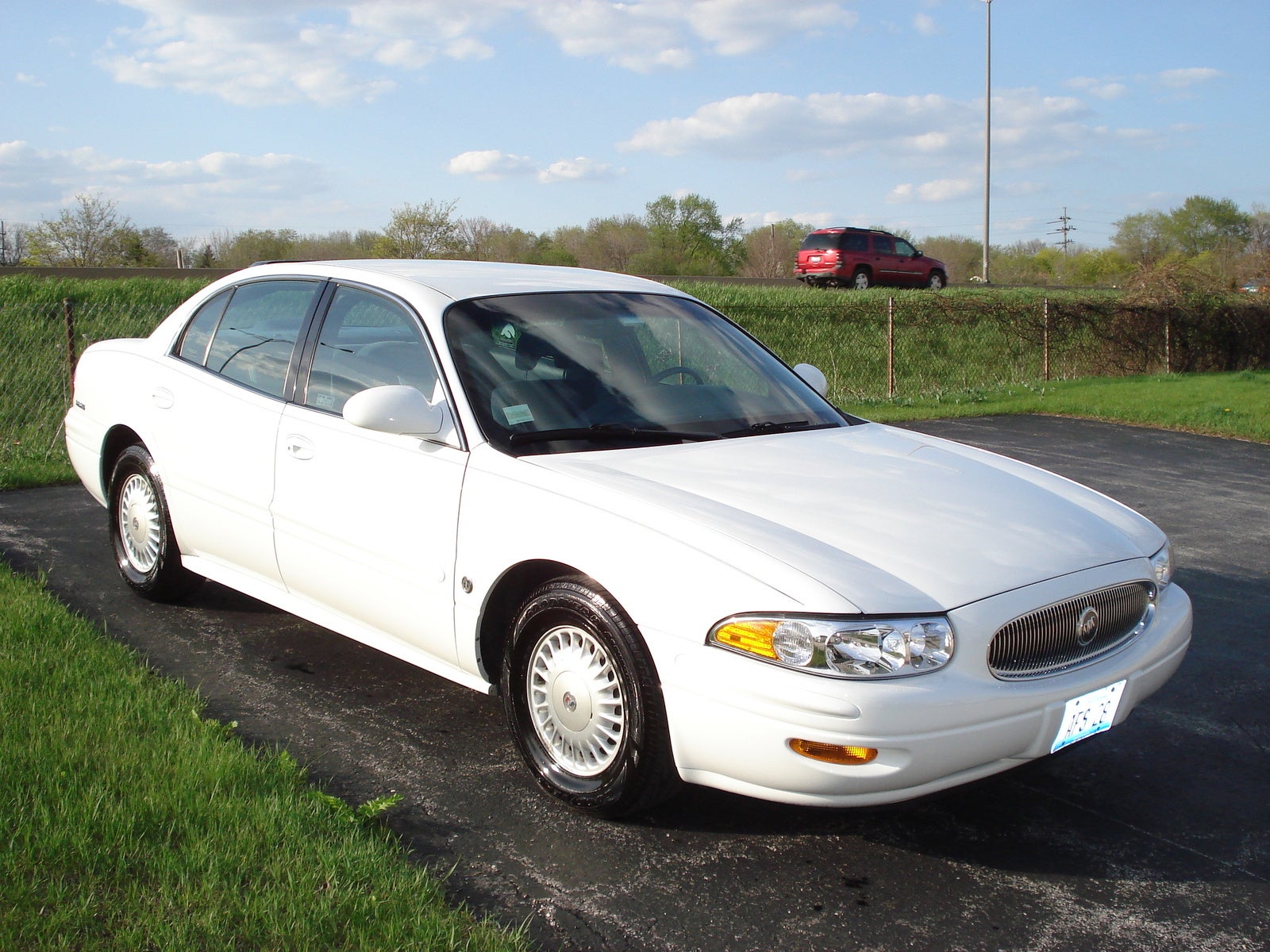 Luxury Buick Lesabre with white color
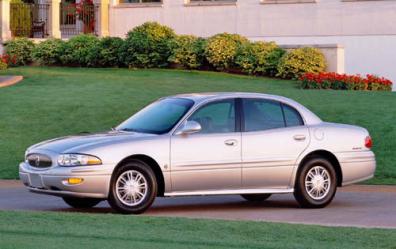 Elegant and stylish Buick Lesabre with silver color
 Sporty Buick Lesabre with silver color
 Popular Buick Lesabre with white color and sporty design
 Elegant shiny black of Buick Lesabre
 Popular Buick Lesabre with luxury red color
 Buick Lesabre interior view

